
Technology
Accurate indoor location data in real time
Iiwari's technology shows accurately and in real time where the tracked people and devices are. The technology is based on a positioning network installed in the building, consisting of anchors, tags and a gateway, together with the Iiwari Cloud service that runs them.
The system is based on highly accurate Ultra-wideband (UWB) radio technology. Iiwari's own technological expertise spans positioning devices and algorithms, the cloud service, the APIs and the design of the positioning network.
Iiwari Care is one example of a solution using Iiwari location data, but the technology can also be integrated into a customer's or technology partner's own software and service.
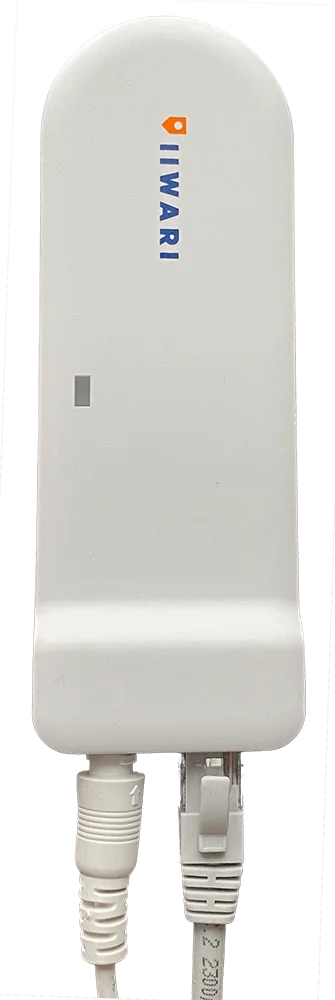
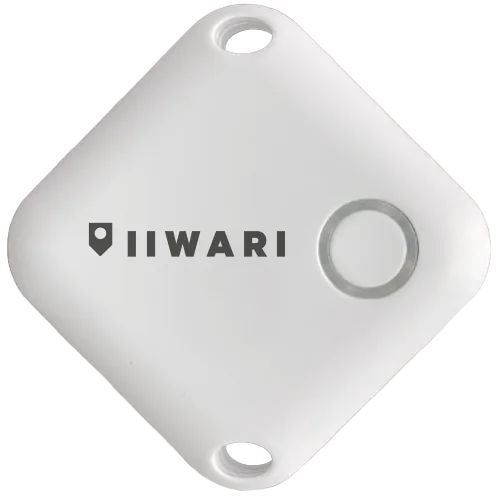
Positioning is based on a network built into the space
Accurate indoor positioning requires a dedicated positioning network in the building. Iiwari anchors are installed on ceilings or walls so that they cover the spaces to be tracked. A small tag carried by a person or attached to a device transmits a signal, and the system determines the tag's location based on it.
Iiwari designs the anchor placement based on the site's floor plans and intended use. The same positioning network can serve several purposes and locate people, equipment and other assets, for example.
Why does Iiwari use UWB technology?
Highly accurate location
Iiwari's system typically achieves sub-metre positioning accuracy, and in ideal conditions down to 10 centimetres. This accuracy lets the system reliably identify the right room or a defined area, for example.
Suited to demanding environments
UWB uses a different frequency range than Wi-Fi or Bluetooth, and the positioning system does not load the building's Wi-Fi network. The technology works well in environments with many wireless systems running at the same time, such as care homes, hospitals and industry.
Iiwari's own technological expertise
Accurate and reliable positioning comes from devices, software, positioning algorithms and a carefully designed positioning network working together. Iiwari develops this whole and can adapt the technology to different environments and purposes.
The core of the system
Four parts make up the positioning system
Anchors
Anchors installed on the ceiling or wall form the building's positioning network and receive the UWB signals from the tags. The number and placement of anchors are planned per building.
Tags
Small, lightweight tags are carried by the tracked person or attached to a device or other asset. The battery of the new Iiwari tags lasts over five years with a 60-second update interval when stationary and once per second when moving.
Gateway
The gateway installed at the site manages the positioning network and forwards the data to the Iiwari Cloud service.
Iiwari Cloud & Dashboard
Iiwari Cloud processes the data produced by the system. The Dashboard is used to manage the positioning network and to view and analyse the data.
Location data can also be delivered to a customer's or technology partner's own software through the public REST API.
How positioning works
From tag to location data in four steps
1
The tag transmits a signal
A tag carried by a person or attached to a device transmits a UWB signal.
2
Anchors receive the signal
The anchors installed in the building receive the signal sent by the tag.
3
The system determines the location
Iiwari's technology calculates the tag's exact location from the signals and forwards the data to the cloud service.
4
Location data is available to applications
The data can be used in Iiwari's own solutions or delivered through the REST API to the customer's own software.

Iiwari positioning technology as part of your own solution
Iiwari's technology is not tied to Iiwari's own applications only. If your company develops software or a service that needs accurate, real-time indoor location data, Iiwari's positioning technology can be integrated into your solution.
That way you do not need to develop indoor positioning yourself. Iiwari produces the location data, which your own software can use through the API.
The technology can be used in care and hospital solutions, safety and security, workflow automation, tracking equipment and other assets, and in other solutions where accurate location data creates new value.