
Solutions · Direct Care Measurement
Making care work visible – automatically
The quality of care is built on encounters with residents. Yet these have always been hard to measure reliably.
Iiwari Care automatically measures how much time nurses spend with residents. When a nurse and a resident are in the same room or within a defined distance of each other, the system recognises the situation and logs the care event without any extra steps.
The result is more transparency, less manual logging, and better data to support decision-making.
Part of the same whole: a location-aware nurse call, a real-time situational picture, automation and care work data.
Measurable data
What does direct care measurement tell you?
The system automatically generates data that previously required manual work to collect.
- Care time per resident, accurate to the minute
- Automatic arrival and departure logging
- Number and duration of care visits
- Share of direct care in total working time
- Distribution of staff workload
- Tracking of progress across different periods
All the data is generated automatically alongside normal work.
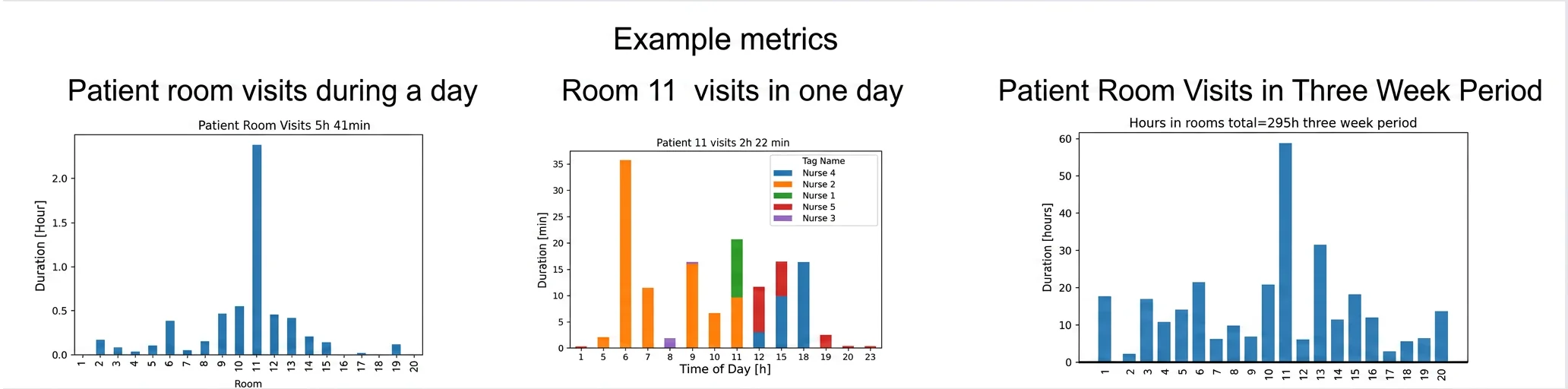
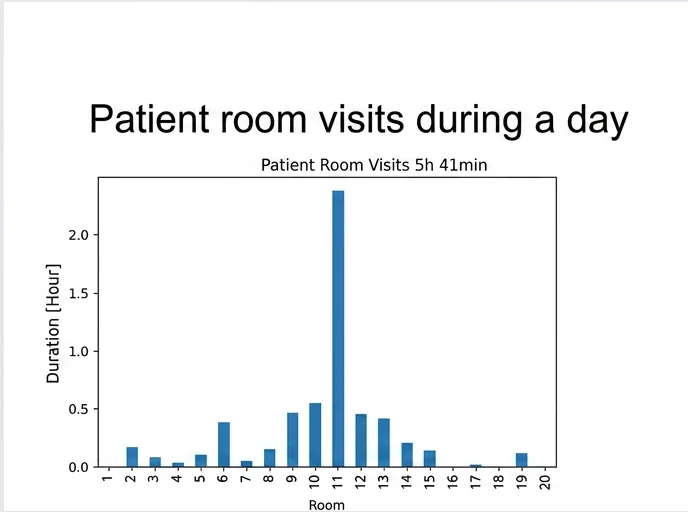
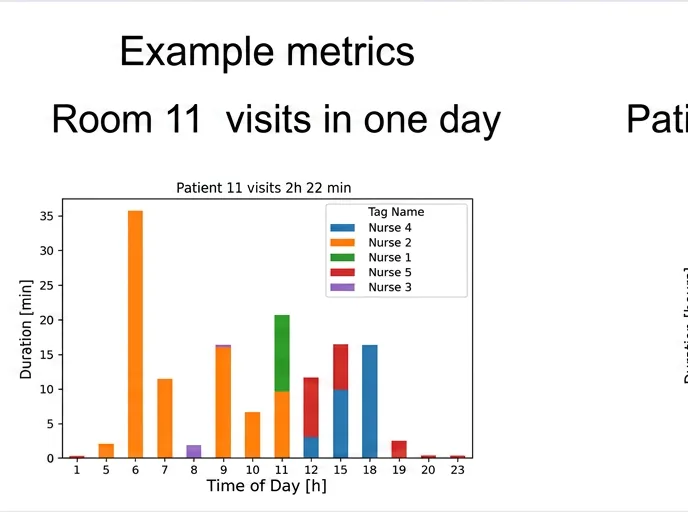
Example metrics
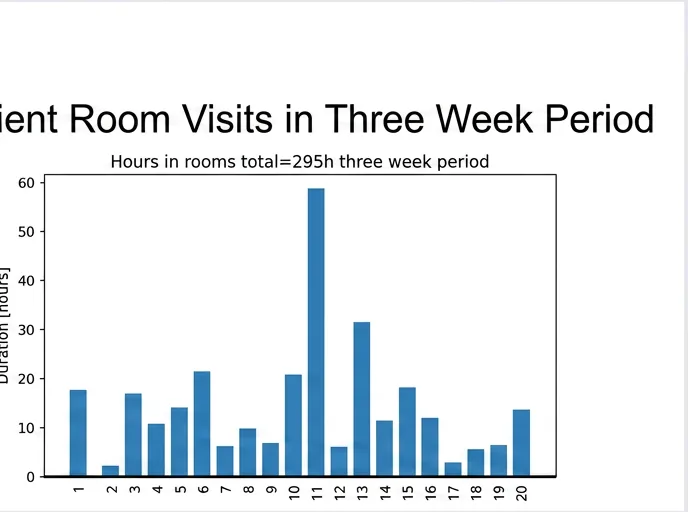
How the data looks in practice
Automatically collected data becomes a visual picture of how care is delivered – by room, by day, and across longer periods.
Time for what matters
Free up time for what matters most
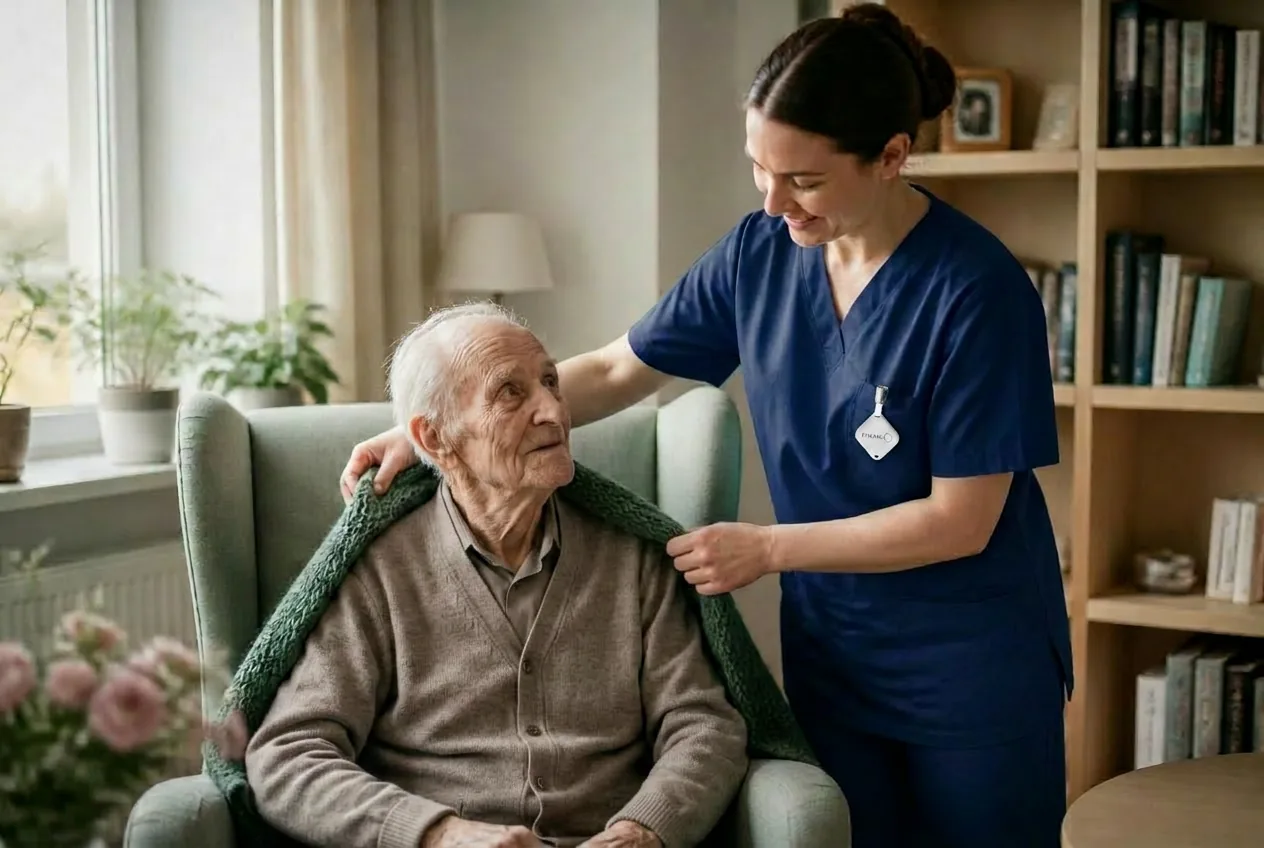
A significant share of nurses' working time is spent on logging and reporting.
When care events are recorded automatically, more time is freed up for meeting residents. At the same time, data quality improves, since entries are based on automatically collected data rather than assessments made in a rush.
Supporting leadership
Better leadership through reliable data
When everyday work becomes visible, decisions can be made based on data instead of assumptions. Iiwari Care helps, for example, with:
- balancing staff workload
- identifying peak periods and demanding times
- tracking care time spent with residents
- assessing whether resources are sufficient
- measuring the impact of changes
- reviewing the course of events afterwards
Management gets a real-time view of how care is actually delivered in practice.
Read more: Automatic care time measurement – transparency, quality and legal protection for care homesImpact
Provable impact
How do you know if a new operating model or digital solution improved care work? Iiwari Care measures direct care work automatically before and after the change. This way, the effects of development measures can be demonstrated with reliable data rather than just based on experiences.
Direct care measurement enables, for example:
- before-and-after comparisons
- verifying the impact of digital solutions
- measuring the impact of resource and operational changes
- monitoring the success of development projects
Objective measurement data helps show what truly improves care work.
Read more about how Iiwari Care's measurement capability helps evaluate the impact of AI toolsTransparency
Transparency for all stakeholders
Automatic measurement builds trust across the whole care chain.
Hover a room or a bar – the highlight shows in both.
Management
Gets reliable data to support the development of operations.
Nurses
Manual logging decreases and the work they do becomes visible.
Family members
Can trust that care is delivered as planned.
Authorities
Have access to objective data on the care that was actually provided.
Direct care measurement is not about monitoring staff. It's about making visible the care work done every day.
Supported living for people with intellectual disabilities
Service class definition and billing without a stopwatch
In round-the-clock supported living units, a resident's service class – and therefore the billing – is based on measuring care intensity. Iiwari Care produces that data automatically and continuously.
Today: the stopwatch
- A manual two-week measurement period twice a year
- A sample that only describes a short window of time
- Logging takes nurses' time away from care itself
- Estimate-based classification that is hard to verify afterwards
Iiwari Care: continuous measurement
- Continuous data without separate measurement periods
- Actual care minutes per room
- Reports directly from any chosen review period
- An objective basis for the service class and billing
Residents are not tracked
In supported living units for people with intellectual disabilities, residents are not located. Measurement is based on staff devices, room presence and alarm events. Residents still have their own alarm button to call for help.
Why Iiwari Care?
Summary of benefits
- Automatic direct care measurement with no extra steps
- Care time measured to the minute
- Automatic check-ins and check-outs
- Workload analysis
- Real-time analytics
- Reliable data to support leadership
- Less administrative work, more time for care
Want to see how automatic direct care measurement works in practice?
Book a free demo and we'll show you how Iiwari Care makes care work more transparent and frees up time for what matters most – meeting residents.

Rather talk to a person? Reach out to Rami directly – he'll listen to your situation and tell you honestly whether Iiwari Care is a good fit.